





 English
 Français
 Deutsch
 Italiano
 Português
 Русский
 Español
 Svenska
 ไทย
ไทย Türkçe
 हिन्दी
 Filipino
 简体中文
简体中文 한국어
한국어 Polski
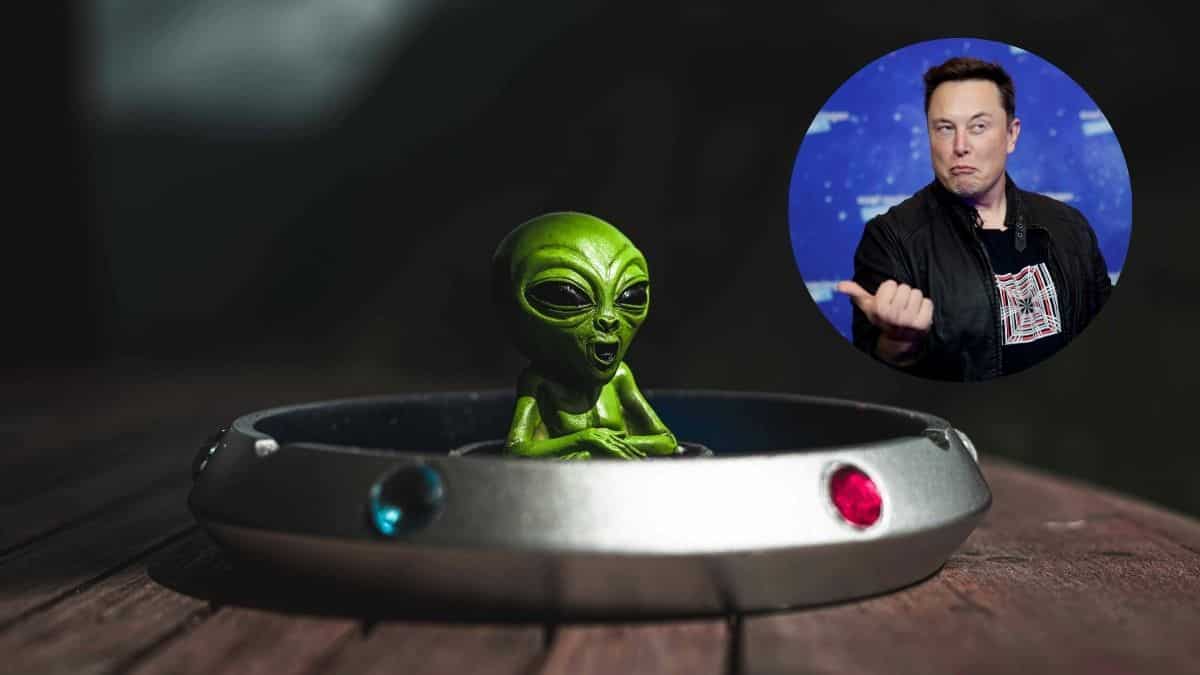
Elon Musk, a gifted visionary, billionaire and often a controversial figure, believes aliens have never visited our planet Earth.
Addressing the perennial question at a panel titled “How to save the human race and other light topics” at the 2024 Milken Institute Global Conference held in Los Angeles on Tuesday (May 7), Musk, however, said if humanity was to send probes into the universe, we would surely find “remains of long-dead alien civilisations.”
What proof does Musk have?
The SpaceX founder, whose company operates the Starlink satellite constellation consisting of approximately 6,000 units, said that his company has never come across unidentified flying objects that could suggest alien presence.
“I’ve not seen any evidence of aliens,” said Musk, as quoted by space.com.
“And SpaceX, with the Starlink constellation, has roughly 6,000 satellites, and not once have we had to manoeuvre around a UFO… Never. So I’m like, okay, I don’t see any evidence of aliens,” he reasoned.
He said that this lack of evidence leads him to believe that if such advanced alien civilisations existed, they would have made their presence known more concretely.
However, he said he is open to concrete proof about visitations by the so-called little green men.
“If somebody has evidence of aliens, you know, that’s not just a fuzzy blob, then I’d love to see it, love to hear about it,” he said, adding “But I don’t think there is.”
Watch | Are Peruvian Alien Mummies Real or a Clever Hoax? Harvard Expert Weighs In!
Humanity, a ‘tiny candle in vast darkness’: Musk
Mulling over what this means for the future of humanity, Musk suggested that the absence of contact with alien civilisations might indicate that advanced societies are both “precarious and rare”.
He said that if there are aliens out there and an alien species has managed to survive for a million years or so, it should’ve been able to settle in the entire Milky Way galaxy.
“So, they haven’t, so why not?” he asked before speculating a probable answer.
“I think the answer might be, probably, that civilisation is precarious and rare. And that we should really think of human civilisation as being like a tiny candle in a vast darkness.”
This, he argued, underscores the importance of safeguarding human civilisation.
“We should do everything possible to ensure that the candle does not go out,” he stressed.
(With inputs from agencies)
Read the full article here