









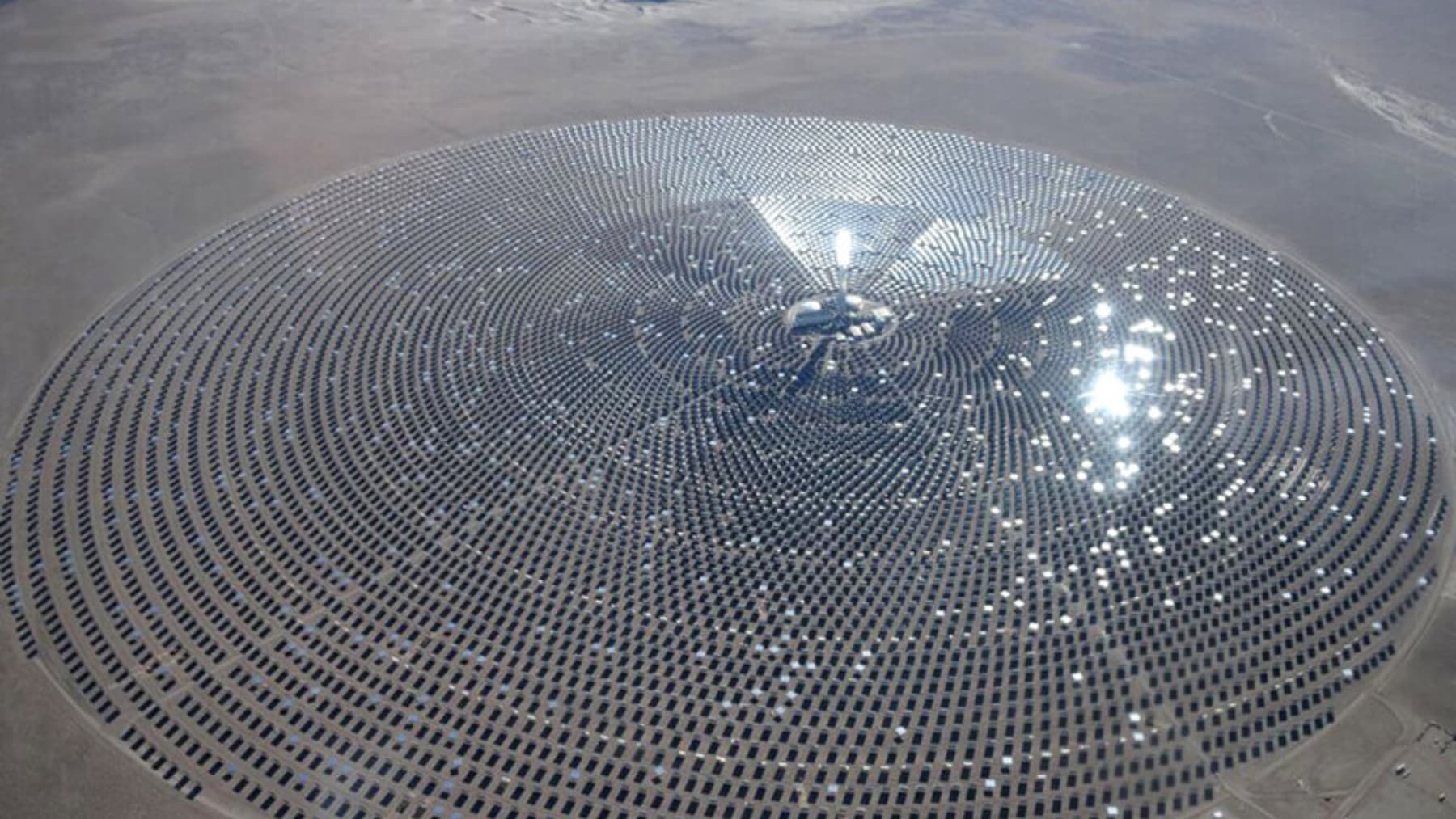
There’s a new, space-age green energy plant out in the Mojave Desert employing technology called concentrated solar power, or solar thermal power, but don’t make the mistake of thinking this is the same solar power as we’ve come to know it in the form of panels on roofs or solar farms. The huge photovoltaic heliostat arrays out in San Bernadino County look like UFOs have landed.
Futuristic uber-solar farm in Mojave Desert generates power 386 megawatts
It’s not a stretch to describe the phenomenal number of 10,000 mirrors arranged in a vast circular formation in the middle of the Mojave Desert as otherwordly. The innovative solar thermal power plant is actually made up of three separate, individually certified plants under the name of Ivanpah Solar Electric Generating System (ISEGS). The 386-megawatt project is based on heliostat mirror technology and a distributed power tower system, whereby heliostat fields (made up of mirrors) direct intensified solar energy at receivers placed on towers at the center of each circular array. It sounds spacey, right?
Each site has its own heliostat array (circular mirror setup) and a single, central receiver. Here’s how the project is broken up into plants and their capacities:
- ISEGS Power Plant 1 generates 120 MW under normal operating conditions and takes up around 914 acres. It contains 53,500 heliostats.
- Power Plant 2 has an ideal output of 133 MW and is situated on 1,097 acres with 60,000 heliostats.
- 1,227 acres is allocated to Power Plant 3, which also has a generation capacity of 133 MW.
How does the Ivanpah Solar Electric Generating System create green power?
Each solar plant incorporates a Rankine-cycle reheat steam turbine that gathers live steam from a solar collector situated in the power block on top of a tower. Each plant also houses a nighttime preservation boiler and an auxiliary boiler, which is used during the morning start-up cycle to help with the daily warm-up process. The auxiliary boiler also maintains the steam turbine during cloudy conditions.
How does America’s solar thermal power plant compare to clean power efforts internationally?
Several countries, most notably China, Germany, and Spain, are driving solar technology development with equal intensity to the US.
- China: The People’s Republic is unsurprisingly at the forefront of development in this sector of green energy production. The Chinese government-owned Shenhua Group Corp. signed an agreement to develop infrastructure for a 1,000 megawatt-capacity plant.
- Germany: The European powerhouse has embarked on a nationwide drive called the energiewende, which aims to drive the population to transition to cleaner energy from 25% renewable consumption to at least 60%. Germany, however, doesn’t benefit from as much sunlight in their part of the world, so they have had to put extra effort into sourcing their solar power outside their borders.
- Spain: There are numerous, large-scale operations both operating and being planned in Spain. The country has an abundance of sunshine and is already exporting power to other countries.
The drawbacks of farming solar energy for clean energy generation
There are environmental drawbacks to solar thermal power generation, for example, the Ivanpah Solar Electric Generating System has seen thousands of birds burned to death when they fly too close to the hotter areas of the plant. There are also cost concerns. Solar power is more expensive to generate in some areas than others, although tax subsidies have helped offset the cost and make solar power more attractive to investors.
Storage complications are also a concern. For obvious reasons, solar power can only be generated during the daytime, so systems need to be in place to keep the supply regular at night. Unforeseeable weather factors can also interrupt operations with cloud cover, snow, and even dust on the panels.
While it’s clear that there’s still a long way to go to make solar power processing streamlined, practical, and viable on a larger scale as commercial ventures, developments like the Ivanpah Solar Electric Generating System are stimulating growth and learning, paving the way for bigger and better technological advancements in the worldwide drive for zero carbon emissions.
Read the full article here