









This research reveals the complexity of considering beleaguered topics in academia. There were certainly faculty in the study who said this subject deserves no attention whatsoever. Some espoused apathy. Some even thought that researchers in this area should be “ashamed” or are “bought off or just dumb”. Others viewed extant stigma as contrary to the pursuit of knowledge, prohibitive to scholarly interests, and fostering abandonment of responsibility to critique narratives, which one participant thought could be “quite dangerous and could easily be a pretext for atrocities against humans”.
Importantly, these results combined with recent findings underscore the conflict between academic freedom and the social component of respectability and acceptability by which scholars fear the lack of approval from peers over the questions they ask. Faculty report mediocre confidence in future government reports on UAP, assess scholarship on UAP as more credible than journalism, government reports, and legislation, and many would be more likely to conduct UAP research if someone they considered reputable did so (Yingling et al. 2023). Where does this leave us?
Stigma: social and professional sanctions
Some faculty demur as to whether this topic fits legitimate academic inquiry. Further, stigma remains elevated. Yet who draws the line of “acceptability” for research questions or conversations? In recent decades, adjacent areas of inquiry have received severe scorn (Israel, 1995). However, boundaries on other stigmatized subjects have shifted before. Few people today dismiss or bristle at research on sexual health, religiosity, mind-altering substances, or the search for extraterrestrial life (SETI). Though de rigueur today, these fields met sensitivity and scrutiny mere decades ago.
Results indicate that faculty who fear negative social and professional sanctions may be greater in number than faculty who would choose to sanction them. However, this most certainly does not simply render the topic accessible. Indeed, we the researchers experienced overt stigma when we simply and sincerely asked faculty for their opinions. It mattered not that we initiated questions in the context of conversations and legislation of the U.S. federal government.
In fact, although some faculty expressed enthusiasm for receiving our invitation (e.g., “I was absolutely delighted to find such initiative in my inbox. Overjoyed…!), as reported in greater detail elsewhere (Yingling et al. 2023), the first email we received from a prospective participant expressed insult. In open-ended survey responses, we were told to “be careful” and we were wished luck with our tenure cases by a participant who once tried to openly discuss the topic but now avoids it due to stigma. However, in the aggregate, faculty responses suggest that unease may not be accompanied by actual professional sanctions. That said, although a minority of faculty reported that they would vote against a colleagues’ tenure and/or promotion case for conducting UAP-related research (7.4%), a much larger minority (27.95%) reported that they might. Open-ended responses provide some insight into this more conditional response and suggest that respondents differ in their reasoning. While some communicated that what matters is the quality and impact of a colleague’s work, others outlined their expected boundaries of investigation. Specifically, that their vote would depend on how a colleague approached the topic or how much time they devoted to it. According to some faculty, acceptable areas of inquiry into UAP belong within the confines of literature, culture, and mental illness. Yet, into which of these bins would they file recent taxpayer-funded studies and reports on UAP? Do previous labels of entertainment, delusion, or folklore remain sufficient?
Professors who report the least concern about social and professional repercussions for studying UAP do not represent disciplines that assess themselves as being the most equipped to evaluate them. Art and design faculty were among the least concerned about repercussions but ranked their own discipline among the least suited to study the topic. In contrast, 95.82% of physics faculty ranked their discipline as capable to some degree, with the highest number of faculty across disciplines who responded “Moderately Capable” (31.94%), “Very Capable” (34.72%), or “Extremely Capable” (20.83%) yet nearly three in four reported some degree of concern about ridicule. Similarly, 83.15% of engineering faculty ranked their discipline as capable to some degree but also included some of the highest numbers of faculty who reported some degree of concern that UAP-related research would jeopardize tenure and/or promotion and some of the highest numbers who would vote against a colleague’s case for tenure and/or promotion for such research. Prior research indicates that many faculty think there should be academic participation in the evaluation of UAP information and more academic research on UAP, including half of faculty in physics (49.3%) and engineering (50.6%; Yingling et al. 2023). What does it mean that faculty in these disciplines might also be the most likely to dispense or experience negative repercussions?
Results also point to the role of power dynamics, as responses differed by rank. Newly minted PhDs appear to be the most open-minded toward UAP, if only marginally. Yet pre-tenure, they are clearly the most vulnerable. Another complicating factor is that compared to faculty who did not report interest in conducting UAP-related research, interested faculty more often reported some degree of concern about repercussions and less often reported that they would socially or professionally sanction faculty who do conduct research.
Misconceptions, biases, and language
Participants’ reactions to and assumptions about the investigators, and the survey itself, are telling. Simply presenting this study elicited a range of emotional reactions. At times, some infused their own disciplinary biases (e.g., in response to the single open-ended question, psychologists wondered if we were conducting an experimental survey rather than soliciting opinions about government reports or news). One participant wrote, “In every instance in this survey, UAP could be replaced by tiny pink unicorn with silver wings…UAP is still a spurious category…While I think there may be life out there somewhere in the vast Universe, I do NOT think any of it is coming to the Earth in flying saucers”. In this case and others, some faculty imposed their own preconceptions and language.
Though we employed the term “unknown intelligence” to investigate the significance of arguably the most profound yet exploratory explanation for UAP, we never asserted evidence for this explanation. We did not inquire about “extraterrestrials”, “aliens”, or “flying saucers”. Participants opted to use these terms. We were attentive, cautious, and selective with language, hence our utilization of only the U.S. federal government’s definition of UAP. Elsewise, some faculty spoke to this challenge of definitions and theoretical models to welcome scholarly discourse.
Four quotes that participants volunteered in response to the open-ended question illustrate the difficulty in arriving at consensus lexicons and theories without further research: “I believe UAP exist but do not believe it is from extraterrestrial being.”; “I believe UAP exists, but I don’t believe that so many people can observe it.”; “I am more inclined to believe that our consciousness is not what we think it is than to believe that this is all there is and there happens to also be aliens here.”; and “I believe we have UFOs that are ET-based. I also believe the government has classified technology that may be confused with UFOs….government reports may be disclosed for an agenda….” Others opined that UAP are nothing more than optical illusions, hoaxes, or black ops, among other conventional explanations. Intriguingly, some participants registered the opposite – perhaps somewhat sarcastically – with the phrase “I believe” or “I want to believe.” Referencing the public, others said “people believe” things because they want to believe them.
At this juncture, all of these views arguably stem from a dearth of data. Clearly, cultural baggage impacts this topic. This study shows how stigma associated with extant terms and models limits earnest inquiry and conversation. We are pleased to collect these thoughts, although we never asked about “belief.” Can scholars operate in the realm of “belief”? In the domain of believing one thing or another, how are scholars more valuable than the broader public, who also wrestle with factual fragments that emerge?
Alongside stigma, vocabulary, and disciplinary divergences, these results point to another salient conundrum. Faculty have never before been asked to collect, analyze, or debate data on UAP. That seems to be a fulcrum of discomfort. Understandably, in this context, and with the unexpected ascent of this topic in public discourse, many seem unprepared to engage.
Can faculty transparency about their interests and motivations prevent misconceptions? Besides tenure, do faculty require additional protections to take risks of academic freedom? For those professors who prefer engagement, rarely must other emergent inquiries hurdle presumptions of disinformation, mythology, instrumental error, or even psychosis. Further, academic consequences from governmental mistruths, whether past or present, are perhaps vast. It remains to be seen whether this will cause scholars to avoid public roles in vetting this topic due to fear from narrative, custom, and odium. Concerns for reputational damage are real and relevant.
If UAP developments are a ruse, what an odd ruse to choose to divert attention, extract intelligence, attract talent, develop innovations, obscure technology, bluff, illuminate adversarial progress, cultivate unity or anxiety, or beg for more money. If a peculiar ruse it is, the U.S. Congress has either been conned or is in on a con. Further, it is keenly important to remain aware of tactics in content curation, media manipulation, and perception management (Laslo, 2023; MacLeod, 2019; Pasulka, 2023; Pilkington, 2010; Timm, 2023). Regardless of an individual’s preferred explanation, public fanfare and the copious funding, fiction, fear, and hopefully fact that follow still hang in the balance.
However, if these possible explanations are only secondary motives to a less prosaic, primary driver of this arising UAP discourse, at what point is it reasonable to expect those who revert to old explanations for new developments to prove their assumptions are the most valid? This question is not rhetorical. Events have expanded since we commenced this study. As we all await better information, we suggest considering that time could be now.
If there is more to UAP than deception and naïveté, then UAP are all the more important to examine. And, consequential deception and naïveté are still worth stringent scrutiny. Further, if military and intelligence officials are not playing games, are being truthful about their views, and are yet entirely wrong in their assessments, we have additional serious problems to consider. Confirming momentous results, or confounding momentary riposte, requires expertise across academic areas.
If the forecast portends cultural détente on the UAP topic, which butterfly effect will cause a storm in academic circles? Will scholars lead on this topic, or will they only react to assumptions that waft upon the winds of societal change? Ignoring the topic outright might soon become passé.
Funding and data
Faculty commented on funding in open-ended responses. On whether funding should be allocated for UAP research, they disagreed. Opinions diverged on which forms of funding are most appropriate and the amount of funding that should be allocated given competing priorities. Further, asking if funding should exist does not amount to assuming that it must. Referring to this study on faculty perspectives, another participant erroneously opined, “I can’t believe you got grant funding to do this.” We did not. There is no such grant. Assumptions about incentives are instructive.
Further, one participant insisted that, “You should have been more transparent as to how you will personally benefit from conducting this survey.” On this topic perhaps transparency is of greater importance than in more standard lines of research. We have no personal benefit from conducting this project and dealt with suspicion we never faced in our other research. Rather, offering new knowledge—including recording cynicism and other reactions—hopefully benefits a wide audience.
These quotes arrived alongside comments from faculty that the study of UAP is a waste of time and money. This demonstrates the challenge to considering if, and how, funding mechanisms for study of novel topics could, or should, appear. This is at variance with the more than one-third of faculty who report interest in studying UAP (Yingling et al. 2023). However, tellingly, 54.89% of faculty report that they would be more likely to study UAP if there was funding to do so. Relatedly, research funding is competitive and occurs in a context of dwindling support for higher education (American Academy of Arts and Sciences, 2016; Whitford, 2021). Entire fields, disciplines, and universities have become chronically unfunded or underfunded (Bird, 2022; Fisk and Atun, 2009; Testino, 2022; The Graduate School: Postdoctoral Affairs, n.d.).
An aversion to conversation renders academia less relevant to considerations surrounding possible funding. For instance, considering the military and aerospace actors with long histories of exorbitant governmental funding, a likely outcome might be the prioritization of advanced weapons platforms or space domination rather than considering broader human interests. Studies already funded by taxpayers remain bureaucratically submerged. In the case of UAP, public and private money could certainly follow recent developments. To whom will researchers who accept such money answer? How might this tinge perceptions of results? Who will set the parameters? How might those already queued to serve themselves further beset public benefit or trust surrounding this subject? Which comes first, public UAP studies or funding? Perhaps moving forward, the two are inextricable.
Further complicating research considerations is the problem of informational asymmetry. Academia has a severely limited dataset compared to classified sources, as some participants noted. Military and intelligence personnel have, only recently and partially, shared such sources and data with congressional committees tasked with oversight. By word and deed, it seems some officials’ interest in UAP has been piqued by information collection paid for by a citizenry that is prevented from knowing any details that might offer important nuance to our knowledge base, even if the public never needs to know national security sensitivities or collection methods.
Recent legislation has started to consider this issue. In July 2022, the Pentagon renamed and somewhat revamped the UAP office, now called “AARO,” the All-Domain Anomaly Resolution Office (O’Connor, 2022). Among other duties, it must create “procedures to synchronize and standardize the collection, reporting, and analysis” (National Defense Authorization Act for Fiscal Year 2022, 2021) of incidents and issue annual reports. This would require staff to review cases dating to January 1, 1945, including “any efforts to obfuscate, manipulate public opinion, hide, or otherwise provide incorrect unclassified or classified information” (National Defense Authorization Act for Fiscal Year 2023, 2022) regarding UAP or linked activities. It remains in question what findings the public will eventually see.
Limitations and opportunities
The sample size of this study is larger than recent surveys among faculty at institutions of higher education, which have ranged between 113 and 329 (Sabagh et al. 2018). However, the primary limitation of this study is the response rate. Without question, supported by evidence respondents themselves offered, the stigma attached to this topic contributed to the low rate. Importantly, faculty responses do not indicate that self-selection bias occurred based on interest in the topic; only ~6% of faculty reported that they frequently or very frequently seek news on this subject. Future research in this area will require consideration of not only increasing response rates but also improving representation across gender and race-ethnicity (see Yingling et al. 2023 for detailed discussion of response rate and sample demographics).
This study is also limited due to its novelty and method utilized. Research on any topic must begin somewhere, and we initiated work in this area using a survey. Although this enabled a large sample size, the inability to ask nuanced follow-up questions leaves results open to a range of interpretations. For instance, among those faculty who would or who might sanction their peers for conducting UAP-related research, can their response be interpreted as a lack of insight into the potential application to their discipline, as outright rejection, as a combination of the two, or something else? What, specifically, gives faculty who assess their disciplines as capable of evaluating the evidence or significance of UAP their confidence? Among faculty with interest in conducting UAP-related research, what research questions might they consider? Further, we cannot rule out the possibility that faculty who completed the survey are less likely to sanction their peers for UAP-related work than those faculty who did not participate. This study is a preliminary investigation that provides no definitive answers regarding sanctions. Qualitative research might be most appropriate to advance knowledge in areas inaugurated in this study.
Opportunities for future work abound. If the events that have transpired in the time since we closed the survey are any indication—additional legislation, public hearings, whistleblowers, NORAD’s actions to shoot down UAP—there will likely be others in the future. What might faculty thoughts be on the latest and future developments? How might faculty perceptions of this topic and related considerations of academic freedom evolve? How might developments influence faculty engagement? What personal or institutional factors might influence faculty to conduct UAP-related research?
In various ways, some scholars have recently studied cultural responses to anomalies, albeit in some disciplines that registered less stigma than others (Andresen and Chon-Torres, 2022; Finley, 2022; Lepselter, 2016; Peters, 2011; Washington Post Live, 2021b). How might faculty perceive this scholarship in the context of ongoing UAP developments? How might faculty actions, reactions, or evaluations influence current events or public opinion? These and other questions are ripe for investigation and would benefit from mixed methods and longitudinal approaches.
What next?
Developments related to UAP are ongoing. On June 22, 2023 Senators Warner (D-VA) and Rubio (R-FL) introduced a complete draft of the 2023–2024 Intelligence Authorization Act for congressional consideration (Text – S.2103 – 118th Congress (2023–2024): Intelligence Authorization Act for Fiscal Year 2024, 2023). The intent of Section 1104, “Funding Limitations Relating to Unidentified Anomalous Phenomena”, is for the Federal Government to “expand awareness about any historical exotic technology antecedents previously provided by the Federal Government for research and development purposes” by requiring transparency of government offices and contractors. No later than 180 days of enactment, “any material and information…relating to unidentified anomalous phenomena that formerly or currently is protected by any form of special access or restricted access” must provide “a comprehensive list of all non-earth origin or exotic unidentified anomalous phenomena material”.
Significantly, one of the most prominent politicians in the U.S., who has rarely commented on the UAP topic, presented an extensive and assertive amendment to the most recent NDAA for public consideration. Senator Chuck Schumer (D-NY)—who is the current Senate Majority Leader, has a reputation for cautious calculation, and is a close collaborator on legislation with the Biden White House—announced the “Unidentified Anomalous Phenomena Disclosure Act of 2023” (UAP Disclosure Act of 2023, 2023). With atypical bipartisanship on this issue yet again, Senators Todd Young (R-IN), Martin Heinrich (D-NM), Marco Rubio (R-FL), and Kirsten Gillibrand (D-NY), all of whom hold prominent committee roles regarding intelligence and armed forces, supported co-sponsor Senator Mike Rounds (R-SD) (Congressional Record – Senate, 2023). Schumer and Rubio, as respectively the current Senate Majority Leader and Vice Chair of the Senate Select Committee on Intelligence, have been members of the highly classified briefings afforded to the “Gang of Eight,” members of Congress given briefings on the most sensitive intelligence of the U.S. government. On many other matters, these two senators are regularly at odds (Desiderio and Bertrand, 2020).
The proposed legislation featured more than 20 mentions each of technologies of “unknown origin” and “non-human intelligence,” including specific definitions for these terms. Schumer and colleagues demanded transparency in records, examination of overclassification, and proper governmental oversight of opaque programs that might exist on these topics. In this proposal, these senators expressly promoted academic participation in offering clarity and analysis. The Schumer and Rounds amendment was adopted and approved by the Senate in its final version of the NDAA (S.2226). Much of the most strident language about UAP and nonhuman intelligence was removed in committee within the House (National Defense Authorization Act for Fiscal Year 2024, 2023; Barna et al. 2024).
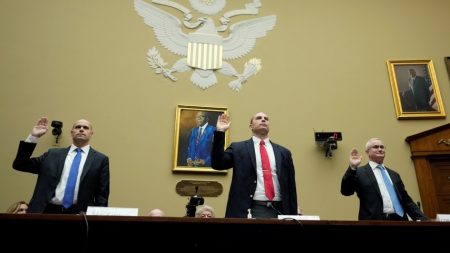
Further, the House Oversight Committee’s National Security Subcommittee announced a new public hearing. This event with former military pilots and whistleblower David Grusch occurred on 26 July 2023 (Rep. Burchett and Oversight Committee Members on Upcoming Hearing on UAP, 2023). In this hearing and under oath, Grusch said that the U.S. had recovered various nonhuman materials (Romo and Chappell, 2023).
In December 2023, Dr. Sean Kirkpatrick departed AARO leadership. In lengthy comments since, he has criticized Congress, curious citizens, and the news media. He also chided the Pentagon for excessive secrecy. Kirkpatrick asserted that, “If there is a void in the information space, it will be filled with the imagination of the public right…conspiracies and…accusations” (Seligman, 2024). Elsewhere, he said of those advocating for UAP oversight, legislation, and transparency, “It is basically a religion, a religious belief that transcends critical thinking and rational thought” (Luscombe, 2024).
Kirkpatrick has regularly used “conspiracy” labels to characterize interest in this topic, including among Congress. He asserted, “many of the circulating allegations described above derive from inadvertent or unauthorized disclosures of legitimate U.S. programs or related R&D that have nothing to do with extraterrestrial issues or technology. Some are misrepresentations, and some derive from pure, unsupported beliefs.” Kirkpatrick has also assailed, “The result of this whirlwind of tall tales, fabrication and secondhand or thirdhand retellings of the same, was a social media frenzy and a significant amount of congressional and executive time and energy spent on investigating these so-called claims—as if we didn’t have anything better to do.” He said, “the modern media cycle drives stories faster than sound research, science, and peer review time lines can validate them” yet that the “talented” AARO team that he departed is “striving in collaboration with the armed forces, intelligence community, government agencies, national laboratories, scientific community, academic community—and soon the general public—to collect and analyze hard, measurable data…” (Kirkpatrick, 2024a).
In early 2024, AARO, the office that Kirkpatrick directed in the Department of Defense, released a report on past U.S. governmental investigations into UAP. Overall, it was opaque, with limited data, little discussion of criteria for categories or evaluation, and unclear methods of peer review for findings. However, it did state, “AARO found no evidence that any USG investigation, academic-sponsored research, or official review panel has confirmed that any sighting of a UAP represented extraterrestrial technology.” Elsewhere, it also dismissed “aliens.” Nevertheless, AARO is supporting the advent of new sensors for deployment to better capture data on these unknowns. Some witnesses and whistleblowers disputed AARO findings. There are also conflicting reports as to whether AARO engaged prominent whistleblowers during its investigation.
Questions remain about evidence. What would meet evidentiary standards for undefined categories? Is this report asserting absence of evidence, or evidence of absence? The report acknowledges that significant percentages of cases remain unexplained, and it did not review cases under scrutiny in congressional hearings. The report included more “conspiracy” rhetoric. There is little room to reconcile positions of Kirkpatrick and AARO with whistleblowers—it would seem that one party of the two is extremely wrong. With continued bipartisan frustration from Congress, it is unclear what this overview report clarifies. The public remains subjected to a resilient status quo (AARO, 2024; Hodge, 2024; Rogan, 2024; Tingley, 2024).
As if his feelings were somehow unclear, to coincide with the release of the AARO report Kirkpatrick wrote yet another opinion piece denouncing “the distraction of conspiracy theories” in the title (Kirkpatrick, 2024b). It is unknown whether Kirkpatrick intentionally, or unwittingly, uses “conspiracy” labels here and elsewhere for specific influence (Danesi, 2023; Demata et al. 2022; Dentith, 2024).
Major news outlets seem more inclined to repeat assertions from AARO or Kirkpatrick rather than report on what remains unresolved (Baker, 2024; Barnes, 2022; Bergen, 2024). Without the lag time or rigor of peer review, a factor Kirkpatrick mentioned, news coverage is as prone to present clickbait as it is to reassure the public that this is a topic worth dismissing. As new scholarship percolates, where legacy media has abdicated rigorous inquiry, an alternative media appealing to an expanse of the political spectrum has engaged an interested and wide audience on this debate (“Last Week Tonight with John Oliver,” 2024; Ball & Enjeti, 2023; Ford, 2023).
The ultimate role of legacy intelligentsia remains to be seen. If needed, a course change in scholarship would take time on such a long-beleaguered topic. Nevertheless, this shift seems nascent across disciplines (De la Torre, 2024; Eghigian, 2024; Krame et al. 2024; Medina et al. 2023; Villarroel et al. 2022). Among other events, during a small, invitation-only meeting, a very new think-tank comprised of personnel from academic, military, and intelligence communities presented thoughts to shape this growing conversation, including some conjecture about possible roles for academia in averting consequences of “catastrophic disclosure” (Norton, 2023).
In additional governmental consideration of UAP, the Inspector General of the U.S. Department of Defense issued a separate report on UAP responses in January 2024. One section of the report studied why the “DoD does not have a comprehensive, coordinated approach to address UAP.” This report found that the “DoD has no overarching UAP policy and, as a result, it lacks assurance that national security and flight safety threats to the United States from UAP have been identified and mitigated” (Inspector General, 2023).
On a few issues, including whether multiple, credible witnesses have approached Congress directly, high-ranking senators differ from some statements by Kirkpatrick and AARO. In mid-2023, Sen. Rubio stated, “I will say there are people who have come forward to share information with our committee over the last couple of years” with “firsthand knowledge, or firsthand claims of certain things” and that he tried to be “cautious” as he felt “protective” of some current government employees who were “fearful” for their careers or for “harm coming to them.” He said Congress owed them a “mature” intake of information without “prejudgment,” as some of the witnesses had held “very high clearances.” Rubio continued, “You do ask yourself what incentive would so many people with that kind of qualification—these are serious people—have to come forward and make something up”. Sen. Rubio added that, “one of two things here are true, either what he is saying is partially true or entirely true, or we have some really smart, educated people with high clearances and very important positions in our government who are crazy” (“Rubio,” 2023).
After the Schumer-Rounds UAP amendment was diluted in committee within the House, both senators made a colloquy on the U.S. Senate floor in December 2023 about the importance of their unique amendment. Schumer, noting the interest Americans hold in the topic, said that “with that curiosity comes the risk for confusion, misinformation, and mistrust especially if the government isn’t prepared to be transparent. The United States government has gathered a great deal of information about UAPs over many decades but has refused to share it with the American people. That is wrong and additionally breeds mistrust. We have also been notified by multiple credible sources that information on UAPs has also been withheld from Congress, which if true is a violation of laws…” He continued, saying, it was “beyond disappointing that the House has refused to work with us on all the important elements of the UAP Disclosure Act…” Without their provisions, Schumer stated, “declassification of UAP records will be largely up to the same entities that have blocked and obfuscated their disclosure for decades.”
Sen. Rounds agreed with these sentiments. In his remarks, he offered regrets that their amendment had been diminished, especially aspects such as the “government-wide review board composed of expert citizens, presidentially appointed and Senate confirmed, to control the process of reviewing the records and recommending to the President what records should be released immediately or postponed, and a requirement as a transparency measure for the government to obtain any recovered UAP material or biological remains that may have been provided to private entities in the past and thereby hidden from Congress and the American people” (Schumer on UAPs, 2023; Senate Democrats, 2023). The public has still not seen whatever it is that inspires senators to say such things in prepared remarks in front of live microphones.
What emerged in the final 2024 NDAA legislation were, nevertheless, multiple sections that did directly address “Unidentified Anomalous Phenomena.” Overall, these facets included provisions pertaining to “records collection,” “public disclosure” of data, “grounds for postponement of public disclosure” of UAP files, and the “periodic review” for “downgrading and declassification” of UAP files. Further, the NDAA included many new limitations on applications of funding in intelligence, defense, and their contractors. This included “security” for “Government or contractor personnel with a primary, secondary, or contingency mission of capturing, recovering, and securing unidentified anomalous phenomena craft or pieces and components of such craft,” “analyzing such craft, or pieces or components thereof” to study materials, manufacture, origin, performance, “managing and providing security for protecting activities and information relating to unidentified anomalous phenomena from disclosure or compromise,” “actions relating to reverse engineering or replicating unidentified anomalous phenomena technology or performance,” and the “development of propulsion” that is new from UAP studies (National Defense Authorization Act for Fiscal Year 2024, 2023).
In January 2024, House members met in a classified setting with Thomas Monheim, Inspector General of the U.S. Intelligence Community, who briefed representatives on UAP whistleblowers. After this, Rep. Moskowitz (D-FL) stated, “This is the first real briefing that we’ve had that we’ve now made, I would say, progress on some of the claims Mr. Grusch has made.” That week, Reps. Garcia (D-CA) and Grothman (R-WI), who attended this briefing, introduced new legislation to protect civilian aviation personnel for reporting UAP incidents to the FAA, which would be required to pass reports to a Pentagon UAP office (Becket, 2024). After this briefing, Rep. Andy Ogles (R-TN) said that “there is a concerted effort to conceal as much information as possible.” Rep. Raja Krishnamoorthi (D-IL) said, “unfortunately, I didn’t get the answers I was hoping for.” Rep. Tim Burchett (R-TN) said the process was like playing “whack-a-mole” (Mitchell, 2024). Leaving that same briefing, Rep. Luna (R-FL) said, ‘I think it’s incredibly important to listen to the specific words that Grusch uses, you know, Grusch never said “extraterrestrial” or “alien,” he said “interdimensional”’ (Pergram, 2024). Of this context, Rep. Burlison (R-MO) asserted that “Regardless of what it is – aliens, angels, or just us, right? … Regardless of what it is…we are being blocked from information, that the information is being specifically compartmentalized, that’s violating federal law” (Desrochers, 2024).
In July 2024, as the next NDAA forms, Sens. Rounds and Schumer have re-introduced a very similar amendement to their UAP proposal from 2023 (UAP Disclosure Act of 2024, 2024). This includes an entire section titled, “Disclosure of Recovered Technologies of Unknown Origin and Biological Evidence of Non-Human Intelligence.” In May 2024, Rep. Robert Garcia submitted comparable draft language in the House. Tellingly, Garcia also submitted an amendment to expand AARO access to Title 50 clearances, which would expressly permit AARO access to intelligence agency data they may have missed (Amendment to Rules Committee Print 118-36, U.S. House, 2024a; Amendment to Rules Committee Print 118-36, U.S. House, 2024b). Further, as announced by Sens. Warner and Rubio, the Senate Select Committee on Intelligence passed the 2025 Intelligence Authorization Act, which will “require a Government Accountability Office (GAO) review of the All-Domain Anomaly Resolution Office regarding unidentified anomalous phenomena reporting and Federal agency coordination” (Rubio, 2024; Warner, 2024).The pace and increasing specificity of these developments from some of the most influential politicians in the U.S, many of whom also have access to highly classified information, even more firmly raises the question of not only how the professoriate should engage, but what role it should play in assessing and researching UAP. How to help a public decipher new information is arguably more important than ever. It is necessary but not sufficient to ask how we know any emergent datapoints. Why are we encountering the information that we do from the venues that offer it? Why now? What is the cost to quality intellectual inquiry from the cacophony of signals from the U.S. government? Who benefits from the public curation, or private sequestration, of information vital to comprehending this topic? Who suffers from this selectivity?
If nothing else, the consideration of such recent information and other closed-door events—that is, who benefits from how the UAP narrative has developed and who does not—demands scrutiny from a wide range of capable minds. Some faculty in our study do not wish to engage the subject. Others think they are capable and, it seems, are willing to vigilantly do so. When it works, academic freedom is multidimensional—individual scholars may choose how to engage or not.
Readers may think these current events amount to an elaborate snafu or psy-op. Or, they may think they amount to a profound possibility for human history. Clamor for clarity should thus crescendo, either way. In many quotes, one of the only common interests for groups with competing claims about UAP is that they all seek input—or even an imprimatur—from academia. How the professoriate will ultimately respond to these many unknowns remains to be seen. Even if unpopular to some, employing the scrutiny of expertise because it amounts to something consequential, while reasonably withholding conclusions, might prove prudent.
Solving a Rubik’s Cube is difficult in the dark. Shall we turn on more light? In the spirit of academic freedom, which is currently “under fire” (Cole, 2021), let us grant peers the space to conscientiously follow their curiosity and concerns on these matters. Regardless of where current questions lead, perhaps we will thank them later.
Read the full article here