








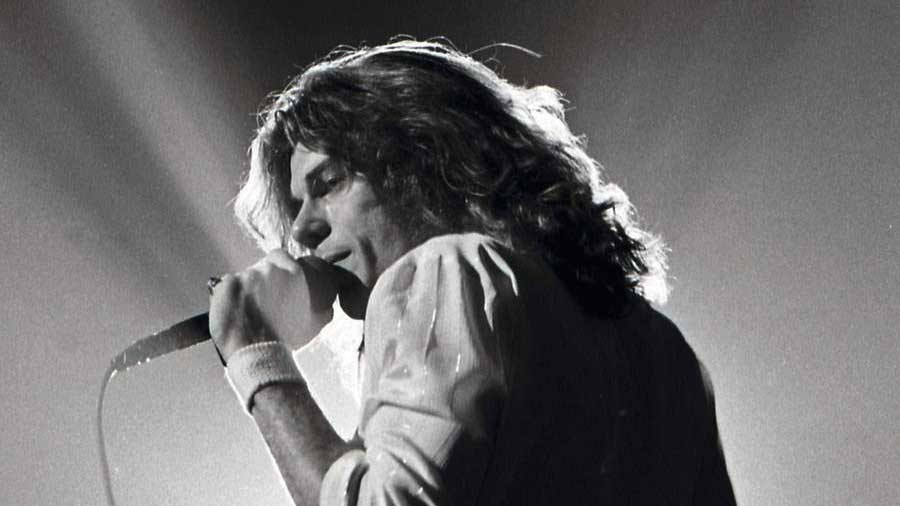
John Sloman is a Welsh singer, musician, and writer. He is best known for being the lead vocalist for the Welsh band Lone Star during 1977/78 and for fronting the classic rock band Uriah Heep from 1979 to 1981. Sloman also briefly recorded with the hard rock band UFO in 1980 and was part of Irish guitarist Gary Moore’s band, with whom he recorded the classic “Live in Japan” album in 1982.
His career began with the local Cardiff act Trapper before joining Lone Star, and after his stint with Uriah Heep, he formed the short-lived John Sloman’s Badlands. Although Badlands did not secure a record deal, Sloman continued to work on various projects throughout the 1990s and beyond. He has also released several solo albums, with the first one produced by Todd Rundgren titled “Disappearances Can Be Deceptive,” recorded in 1984 and released in 1989, and the latest one, “Vaudeville,” which came out earlier this year. I met a good-humored Sloman in London a couple of months ago, and there we then went through his long and interesting career from the very early days to this date.
JOHN SLOMAN ACTIVITIES IN 2024
John Sloman, we’re in a London pub for this interview. To start, can you tell me what you’re working on these days and what projects you’re involved in?
John Sloman: Well, I’m working on another book because I released a memoir. I’m losing track of time due to all the COVID stuff. It seems like everyone has lost their sense of time over the past four years. I think it was last year or late the year before that I released a little rock memoir called “Lost on Planet Artifice.” So, I’m working on a follow-up to that and not getting much sleep as a result. That should come out sometime this year. I’m also writing songs, and a new album is on the way.
This is a long story, but I’ll try to keep it brief. I completed the album late the year before last, in December. The same label that released “Two Rivers,” my last album, will be releasing this new one. However, the album was delayed all of last year, which really frustrated me. The delays were constant, and that frustration led me to write another book in an effort to keep myself occupied.
Although it didn’t stop my frustration, I ended up with a new book. Anyway, the new album is called “Vaudeville,” and it’s set to come out in a month or two. There’s already a single out of the title track. I feel somewhat detached from it because the delays made it seem like the album came and went. I finished it the year before last, so I feel that every creative work has its moment. I believe “Vaudeville” should have been released last year. I’m not going to pretend otherwise for commercial reasons. I think it’s a good album, and I’d like people to hear it, but I also want them to know it was delayed all of last year and that I wanted them to hear it last year, not this year.
When I first heard your album ‘Two Rivers,’ it was quite different from what I expected. Was that your goal with that album?
John Sloman: Yeah, well, that’s why I did it. [chuckle] I guess I have a bit of a rebellious streak, and I felt like I was being pigeonholed, pushed into this little box as the guy who sang with Lone Star. People often don’t mention Lone Star, but they’ll mention Uriah Heep or maybe the Gary Moore thing. I wanted to do something that would confound people’s expectations, and I think I achieved that. Some people weren’t sure, expecting me to stick to classic rock, but I know I can switch it up. I can do an acoustic thing, something arty like ‘Two Rivers,’ or a straightforward rock thing. The next thing I do will be more straightforward rock, possibly more what people expect. But ‘Vaudeville’ is a rock version of ‘Two Rivers.’ It has spoken word elements, like ‘Two Rivers,’ but it’s all-electric and quite heavy.
How did you become such a versatile artist, successfully handling many different projects, such as making albums in various music styles, playing several instruments, writing books, and more?
John Sloman: I think it’s because I was growing up in that time when rock music first came together, because a lot of the bands, I was thinking about this the other day, a lot of the bands that came out the late ’60s, early ’70s, the Zeps, Deep Purple, Heep, Sabbath, especially those bands as incredibly, like as if they’d come out of an alien spaceship, they had this grounding in jazz. There was an element of jazz in there, and blues obviously, real old blues, dark stuff. And I find that a lot of the bands now don’t necessarily have that because there’s no criticism of them.
It’s just that they came up in a different era. Their influences are not the same as the first cold pressing of olive oil, so to speak. They took their cues from bands like Black Sabbath, whereas Sabbath and Led Zeppelin were influenced by artists like Miles Davis.
Growing up during that time, I absorbed all those influences. I learned to sing old “Vaudeville” songs as a kid. From ages five to six, my grandmother had me sing Bing Crosby songs and bluegrass songs, even though I didn’t know they were bluegrass at the time. There’s a song called “Are You from Dixie?” Check it out on YouTube—there are many amazing bluegrass versions. I used to sing it when I was seven as my party piece, but I had no idea what I was actually singing about. This early exposure laid the foundation in my mind, allowing me to explore a wide range of musical styles.
LONE STAR AND UFO TALK
In 1977, you joined your first professional band, Lone Star. But before that, is it right to say that though you now sang in a hard rock band, you were still kind of searching for your own musical identity?
John Sloman: Yeah! All those things. Before Lone Star, I was in a band at the age of 17 or 18 with Pino Palladino, who is now an amazing bass player. We met when we were 16. Pino played guitar in this band and used a double-neck guitar like Jimmy Page. It was a really good band with a strong local following. Around 1974, Jeff Beck released “Blow by Blow,” Billy Cobham released “Spectrum,” and the Mahavishnu Orchestra emerged. Suddenly, I became aware of instrumental music. As a singer, I realized I needed to start learning an instrument myself since just singing might not be enough anymore. There are many great singers, but I felt I needed to understand more about music.
At the time, I had a girlfriend with an impressive record collection. She was into Joni Mitchell and owned every great album from the late ’60s and ’70s up to ’75 and ’76, including Jethro Tull’s “Aqualung” and Todd Rundgren records. That’s how I discovered Todd Rundgren. I was 18, full of a yearning to explore this music. Even though a lot of it was beyond my capabilities at the time, I knew it was what I wanted to pursue. I was listening to bands like Return to Forever and Todd Rundgren with Utopia. I was also in a band that had a residency at the New Moon Club in ’76. I would jam continuously and never stick to the song’s proper melody. The older guys in the back of the club, where the drug dealers hung out, would send messages to the stage, saying, “Tell the singer he’s not singing the right melody.” I wanted to jam vocally because I was inspired by instrumentalists. I was also influenced by Stevie Wonder, Robert Plant, Paul Rodgers, and others. I wanted to explore jazz-inflected singing, but it didn’t always fit the expectations of singing in a band.
Paul ‘Tonka’ Chapman, who played guitar in Lone Star, was an experienced musician with a history of touring and playing in bands like Skid Row and UFO. How did you first meet Paul, and how important was he for your future career?
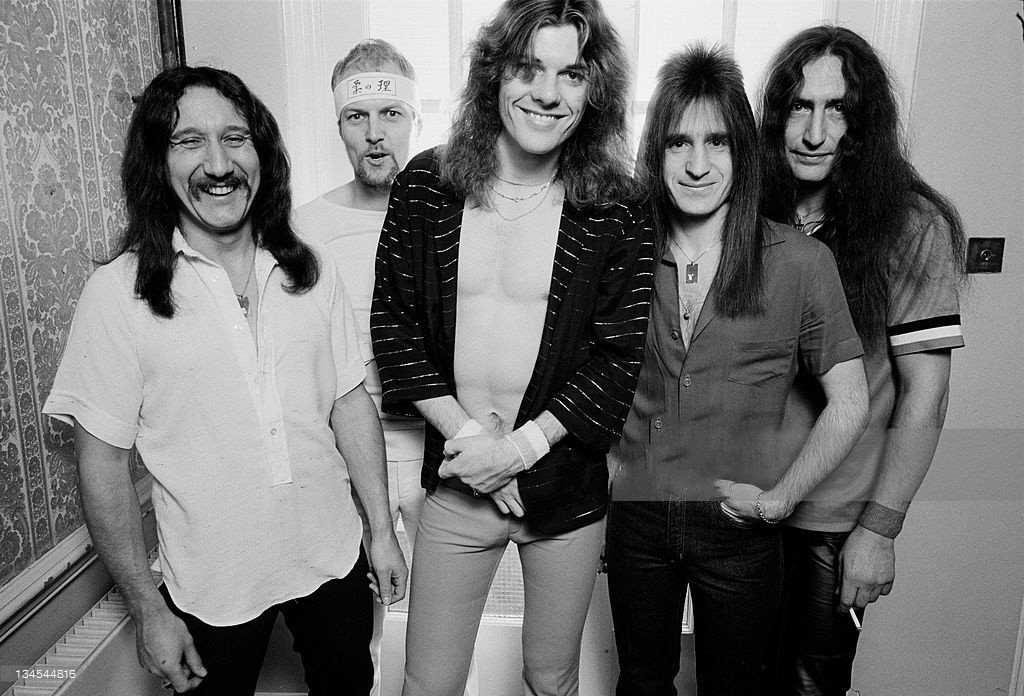
Paul used to play at the Moon Club, and when I was 18, he would have been 21. We would go to the Moon Club and watch him play with his band, Kimla Taz. They were a fantastic band. Tich Beck, whose real name was Tich Gwilym, and Paul played guitars, and Pete Hale, who ended up in Lone Star, was on bass. They were an incredible band. Everyone knew Paul was a fantastic guitar player, and then we jammed together.

There’s a story about a time when we had a residency at the Moon Club with our band, Trapper when we were 17 or 18. The Moon Club looked like it might fall down at any moment, but it was a fantastic place. Many people served their musical apprenticeship there. One night, the bass player Griff and I were at the bar waiting for the other guys to arrive. We were due on stage in 10 minutes, but Pino and Kev, the two guitar players, still weren’t there. We couldn’t do the gig without them. We kept watching the clock behind the bar, and the club’s manager kept looking at us, saying, ‘Hey, you should get on stage and tune-up.’
Then, in walked these guys with an ‘elegantly wasted’ look. And one of them was Tony Smith, the guitar player—the other guitar player. Paul was a couple of years older than me. We were aware of Paul in my circle; we were like the juniors and knew these senior guys like Paul. Paul was only three years older, but he had already toured Germany with his first band when he was 12. When I first heard that, I didn’t believe it; I thought it was just a rock and roll story. But I’ve actually had it confirmed by someone else. That’s why Paul was so seasoned by his 20s; he was already a veteran.
Paul used to play at the Moon Club when I was 18, so he would have been 21. We would go to the Moon Club and watch him play with his band, Kim La Taaz. They were a fantastic band. Tich Beck—Tich Gwilym, as he was properly known—and Paul played guitars, and Pete Hale was on bass and later joined Lone Star. They were an incredible band. Everyone knew Paul was a fantastic guitar player, and we eventually jammed together.
There’s a story about a time we had a residency at the Moon Club with our band, Trapper, when we were 17 or 18. The Moon Club looked like it might fall down at any moment, but it was a fantastic place. Many people served their musical apprenticeship there. One night, Griff, the bass player, and I were at the bar waiting for the other guys to arrive. We were due on stage in 10 minutes, but Pino and Kev, the two guitar players, were still not there. We couldn’t do the gig without them. We kept watching the clock behind the bar, and the club’s manager kept looking at us, saying, ‘Hey, you should get on stage and tune-up.’ Then, in walked these guys with an ‘elegantly wasted’ look, and one of them was Tony Smith, the other guitar player.
He was a founding member and a main writer for Lone Star. So, they strolled into the club, walked over to us, and asked, ‘Hey guys, what time are you playing?’ Griff and I looked at him and said, ‘Well, we’re supposed to be on stage now. We’re already late.’ Tony then offered, ‘I’ll play with you. If you want, I’ll get up there with you.’ He went up to the stage, picked up one of the guitars, and started tuning it. Before we could get on stage, Pino and Kevin ran into the club. They had been playing table football at the local student union bar and had lost track of time. That was the first time Tony Smith and I met.
Through Tony, we were introduced to a guy who ended up managing us. He came down to watch our next gig, and through that whole network of people, I met Paul. We ended up moving to London when we were 17 or 18, and this guy was managing us—I’ll just say he was ‘a businessman.’ We lived in Surrey for a while, then I went back to Cardiff. We later went off to Germany. Oh boy, digging up old stories here. [chuckle] We went to Germany with a bass player who, unfortunately, stole our equipment and sold it to a music shop in Munich. Pino and I were walking down Leopoldstraße in Munich, stopped at a music shop window, and saw our equipment. Pino pointed out, ‘Look, they’ve got a double-neck like mine.’ Pino played a double-neck Ibanez. I then noticed they had a Stratocaster similar to the one Kev, the other guitar player, used to play, which was stripped back to the wood. We were just teenagers, looking in the window, and the expression ‘double take’ comes to mind.
Pino and I looked at each other and realized we were staring at our own equipment. We went into the shop, and eventually, Pino’s father bought our equipment back. I returned to Cardiff, and the band split up. I went back to singing at the Moon Club and started going to school again. People at the back of the club were telling me to sing the melody. One night, Paul Chapman showed up at the club, and we had a jam session where we played ‘Johnny B. Goode’ and a few other songs. Prior to that, I had been approached about doing an audition. Paul pulled me into the back room of the club and gave me a pep talk. Chuckles They had just parted ways with Kenny, the original singer, and Paul knew I was coming in for an audition. Despite being only three years older than me, Paul gave me an almost fatherly pep talk. The fact that he had already done so much, including going to Germany with his first band when he was just 12, made me feel like I was still just pretending to be in school. So, in early January of the following year, I went and auditioned. I wanted to try everything, and I still do. Maybe that’s a lack of discipline, I don’t know, but I enjoy exploring different styles.
Paul Chapman left the band in 1978 to join UFO as a permanent member. How did you react when he told you about his decision to leave?
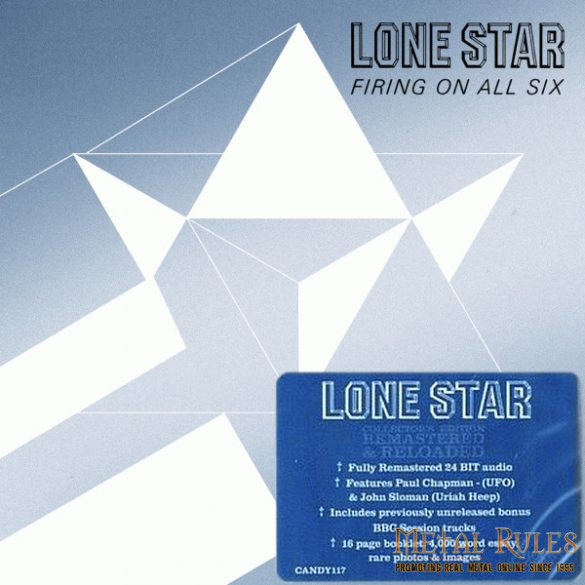
John Sloman: Well, he didn’t, actually. What happened was we had finished the album Firing on All Six, and we all went back to our places. We mostly lived in Wales. We were waiting for the album to come out when Michael Schenker had one of his falling-outs with UFO. It’s not really my business, but that’s what we heard; Michael had another disagreement with the band and left.
So, Paul, who had been with UFO before, was asked to join their tour. That’s really what happened. While we were waiting for the album to be released, Paul went off to the States and did an amazing tour with UFO. Of course, we were thrilled for him, but at the same time, we wished we could be out there ourselves.
We never made it to America; Lone Star never did. When Paul came back, he had all these amazing tour photographs from the States, showing him in front of great stadiums. I remember he had a catsuit made similar to Michael Schenker’s. The thing is, Michael Schenker had the right kind of shape for a catsuit. If you’re going to wear one, you need to be fit, but Paul looked like he’d been squeezed into it. It was a great experience for Paul, and I think it really did him a lot of good.
4o mini
I think the albums from Paul’s time with UFO are really underrated. For example, “No Place to Run” holds up just as well as the classic Michael Schenker albums—it’s just as good and not any weaker at all.
John Sloman: No, not at all. Sometimes I noticed a lot of Michael Schenker in Paul. There are many similarities, even though Schenker is a unique player. To me, the only guitarist I can compare Paul to in terms of sound is Leslie West. Paul had that same beautiful, fat tone that Leslie West used to get. But, of course, he also had all those amazing chops, just like Paul. Paul played some incredible guitar on “Firing on All Six.” There was a song we used to do called “Hypnotic Mover.” It was on “Firing on All Six,” but Gary Lyons, the producer, cut the solo section out. In live shows, it was an eight-minute blowout where Paul would set the place on fire. It was like a Zappa solo, and the band would be amazed. It was one of the best things I’ve ever heard. I’ve got a board tape from the first tour I did, and it’s just amazing. So, I couldn’t wait when we were recording “Firing on All Six.” I thought, “Wow, they’re going to include this amazing solo section.
MORE UFO TALK
How many times did you see Paul Chapman with UFO back then?
John Sloman: I never did.
Really? Did you not want to, or were there some other reasons?
John Sloman: Nope, I never saw them live. During my time with Heep, I had that brief interaction with UFO. We were rehearsing at Nomis, a studio in West London, and Uriah Heep and UFO were down the corridor from each other. It was like that Aerosmith-Run-DMC collaboration with adjoining rooms.
What would happen is that while we were rehearsing with Heep, Paul would suddenly show up in the rehearsal room, often rolling a joint—some things hadn’t changed from the Lone Star days. He would just hang out, and Mick Box and Paul got along really well, which wasn’t surprising since they were quite similar in many ways
So, the next time Paul came in, he brought Phil Mogg with him. Phil walked in, and they both asked, ‘What’s going on?’ I had a piano in the room and was adding some piano to the stuff we were working on. Phil was hanging out by the piano, watching what I was doing, and I was wondering, ‘What’s going on?’
Then I got a call from Wilf, their manager. We were rehearsing with Heep for a tour of Italy, Spain, and Portugal. That’s why we were in the rehearsal room. Wilf said, ‘Listen, the guys wondered if you’d like to come down to the rehearsal room and help us out because our keyboard player can’t make it; he’s stuck in LA.’ I said, ‘Okay, sure,’ because Paul and I knew each other. So, I went over to Nomis, where they had everything set up in the room. It was just me, Paul, and Phil. I got on the keyboards, and they played me different UFO songs, showing me where the parts went. We were just jamming away.
To cut a long story short, at one point, Phil left the room, and Paul looked at me and said, ‘There’s more to this than meets the eye,’ with a wink. I realized there was more going on—like some sort of audition. But I got on great with Phil; it was really fun. At one point, Paul picked up a guitar, and I played bass. Phil said, ‘It sounds like Cream.’ Then I switched to guitar, Paul played bass, and Phil remarked, ‘Oh, it sounds like early Cream.’ Eventually, they asked me if I wanted to join the band, and I said yes. It would have been quite the wild ride!
I said, ‘Well, guys, I’m in Heep at the moment.’ At that point, I considered myself primarily a singer who played instruments, but singing was my main focus. I also mentioned, ‘UFO already has a really good singer.’ Then, I received another call from the manager saying, ‘Well, look, okay, don’t join the band. Do you want to work on the album?’ I said, ‘Sure, that sounds great.’ So, I ended up at Wessex Studios. Mick had injured his hand in a car crash and was out of action for about two months. This was the summer of 1980. Mick said, ‘Well, look, you do the demos.’ We were working on demos for the album that would eventually become “Abominog” after I had left the band. We were demoing songs like ‘Think It Over’ and others.
During the summer of 1980, I was at Wessex with UFO during the day and then went to Shepperton to work on the demos with Heep at night. That’s when we recorded ‘Think It Over.’ Later, UFO asked me to perform at the Reading Festival. At this point, I was having many problems with Heep’s management. Their manager, Gerry Bron, said, ‘We don’t want you to do this UFO album.’ So, I briefly left the band.
I didn’t realize I was under contract. Essentially, I was just supposed to be a session musician with UFO, so I said, ‘Okay, I’m going to leave the band.’ This situation was resolved in a few days. I received another call, and they said, ‘Well, look, we don’t mind if you work on the album after all.’ However, they had no authority over me financially or otherwise
So basically, you were in a really difficult situation, holding two keys and having to choose which one to use.
John Sloman: Well, yeah, that’s right. Sometimes, I wonder what it would have been like if I’d joined UFO. I got along really well with Phil because he knows exactly what he wants, and it’s his band. For instance, I’d get to the studio at, say, 12:00, and Paul would show up at half past two with loads of bottles of Special Brew, always with a story about traffic or something.
Anyway, the first thing we worked on was a piece that became ‘Lonely Hearts.’ Paul had a riff, and Phil asked if I could come up with some chords to go over it. I used major seventh chords, and Phil mentioned he liked the playing of the guy in Springsteen’s band, who at the time was David Sancious.
So, I got what he was after and came up with the parts. That became ‘Lonely Hearts.’ At that time, it didn’t have a title or lyrics. We also did a ballad with Paul on acoustic nylon guitar and me on piano. Months later, I was at home with my then-girlfriend, and we turned on the TV to Top of the Pops. The presenter announced, ‘And now, live in the studio, UFO with the hit single “Lonely Hearts.”’ I heard my piano chords and looked at my girlfriend, who asked, ‘Is this you?’ I said, ‘Yeah, it is.’ She called Wilf the next day since she was in the business and told him, ‘We heard John’s piano parts.’
Did you know Paul Raymond, who had left the band before your UFO experience?
John Sloman: No, I never met Paul. I heard he was a good guy, but I never met him. I didn’t meet many of them. I did some work with Pete Way later on after Pete and Paul Chapman formed Waysted. Pete asked me to do some backing vocals, so I called a friend of mine, Jon Deverill, and we went to the studio to record the backing vocals for Waysted
Pete Way’s passing a few years ago was deeply saddening, but he undoubtedly left behind many good memories for others. How do you remember Pete Way as a person?
John Sloman: He really was a nice guy and hilarious, too, by the way. During the sessions at Wessex, he would say things that made you wonder. He had such dry humor that when he said something, you’d go, ‘Oh, yeah, yeah,’ and then look away and think, ‘What? What did he mean?’ He said, ‘John, the thing is, I’m not really a note bass player.’ I responded, ‘Right, right.’ And he continued, ‘Well, actually, I am a note bass player, but I have difficulty stringing them together.’ That’s what he said. It was one of those moments where you think, ‘Right. Okay. Yeah.’ So, he’s good at notes, but he just has trouble stringing them together.
Paul once told me a story, and again, apologies if this isn’t true, but he mentioned that in the old UFO days, Pete’s then-wife didn’t like him touring and going on the road. So, Pete would arrange the tour and then, on the first day, call his wife and say, ‘Oh, hello love, you’re not going to believe this, but when I went to the shop earlier, I ran into Paul, or whoever, and we’ve got a gig to do, so I’m going to go and do that.’ He would string the whole thing out like that, never saying, ‘I’m going off on the road for six weeks’ or whatever. Then he would call her the next day and say, ‘Oh, we’ve got another gig tomorrow.’ I guess that’s one way of doing it, but that was Pete’s approach.
THE URIAH HEEP THING
As you mentioned, you were a member of Uriah Heep around the time the UFO thing nearly happened. Let’s now go over how you ended up joining Uriah Heep in 1979.
John Sloman: Well, I was in, I had a band in Canada in ’79.
Didn’t you live in Canada at the time?
John Sloman: Yeah. We were actually going there to live permanently: myself, Dixie Lee from Lone Star, and Pino Palladino. We were saying goodbye to our parents, brothers, sisters, and friends. That was it: We were going to Canada. We came back after four months, having played in bars around Ontario. That’s how I met Gregg Dechert.
Anyway, we had problems with Canadian immigration and so on. We ended up coming back in the middle of September. I walked into my parents’ house unannounced; they didn’t know I was coming home with a suitcase. They were like, “Oh, what… Did you just…” [Laughs.] I was doing “the Pete Way thing,” pretending that I’d gone out for a day and had come back after four months. They said there was a telegram on the mantelpiece from Bronze Records and that they were going to tell me the next time I called home. I opened it up, and it said: “Call Bronze Records. Urgently.” So, of course, straightaway, I thought, the only band I knew on Bronze Records was Uriah Heep, but of course, Manfred Mann’s Earth Band had also been on Bronze Records.
And also Motörhead was with them at one point.
John Sloman: Motörhead too, of course. But the first band that sprang to mind was Heep. Just as I was about to pick up the phone, it rang. I don’t know how he got my parents’ number—it was like the grapevine. People must have wondered, “How did you get a hold of him here?” But it was Doug Smith, the manager of Motörhead. He said, “Hi, John, it’s Doug Smith here. I manage Motörhead.” It threw me for a moment because I thought Motörhead couldn’t be looking for a singer. “Look, I’m calling you on behalf of Heep. They’d like you to give them a call.” So, I called Trevor Bolder. I must have been given Trevor Bolder’s number first. When I called the number, I spoke to his wife, who said, “Oh, Trevor’s out for the night.” I asked, “So what is this about? I’ve been calling around for three hours, and people have been calling me. What’s this about?” She replied, “Oh, I can’t say, I really can’t.” I said, “So this is Uriah Heep?” “Yeah.” Because I had heard that Trevor had joined Heep the previous year or two years ago.
Did you know Trevor Bolder before you had the discussion about joining the band?
John Sloman: No, but I knew he had joined. I knew he was in Heep, so I asked, “Are they looking for a singer? Is that what’s going on here?” She said, “I can’t say, I really can’t.” But of course, I realized what was happening. Then Trevor called me late that night. I had gone out for a drink with some friends, and when I came back, my dad was waiting for me. He said, “Oh, Trevor Bolder has called,” and gave me a piece of paper. It was still early, around 11 o’clock. I called Trevor, and he said, “Yeah, we’re looking for a singer. Why don’t you come up? Come to London, and I can fill you in on the details.”
“Okay.” So, that’s right. I went to Bronze Records first after speaking to Trevor. They wanted to hear something, so I brought a copy of “Firing on All Six,” along with some demos and cassettes. I went to Bronze Records and showed up there. Chris Healey, Heep’s tour manager, was present. I said, “I’m just dropping these off in case the guys want to hear something
So, Chris Healy then says, “Well, look, Mick and Ken are down in the studio. Why don’t you go down and say hello?” At this point, I just wanted to catch the train and go home to Wales because I was ready to leave them with the album. If anything happened, it did. So, I went down to the studio, and Mick was great. He was really warm, while Ken was a bit standoffish. I said, “Oh, I’ve just come to leave an album upstairs and some demos you might like to hear.” Mick responded, “Oh, let’s go upstairs now and listen to them.” “Oh, okay.” I really don’t… I don’t think anyone enjoys sitting there while people listen to their stuff.
Anyway, we went to the boardroom at Bronze, where they played “Firing on All Six.” Mick then asked, “What else do you have?” I pulled out some very basic demos we had recorded the year before, or even two years earlier, which we hadn’t played in a while. A week or two later, I came back for an audition, which was awful. I’m not good at auditions. For anyone listening, if you want me involved, don’t make me audition; just get me in the studio, and we’ll work something out. But, so, I did that audition, and it was terrible. At one point, I took a break to go to the toilet. When I came out of the toilet in the studio, which was Roundhouse Studios, I seriously considered going home. I thought about it because things weren’t going well, and I knew Trevor might be a bit disappointed, as by now, I had come to London and spent some time with him.
But I thought, “This is really not going well.” Anyway, I chose to stay and finish the audition. I went back to Cardiff, and I was preparing to go back to Canada. Pino and I were planning to return once we sorted out Canadian immigration and visas and then continue with the band over there. Then I got a call: “Would you come up and do another audition? This time, we’ll sing live.” The first audition had been at Roundhouse Studios, where I was singing over a backing track, not with the band playing live. The guys weren’t even in the room; they were down a corridor watching me on a video link, which was very strange.
So, I went to Shepperton for the live audition. They wanted me to perform “July Morning” and “Easy Living.” I had a copy of “Look at Yourself” from when I was 14, so I pulled out the inner sleeve and wrote down the lyrics to “July Morning” while listening to the album and “Easy Living.” I practiced singing those songs on an awful, out-of-tune piano in my parents’ middle room. I went to the audition at Shepperton, and it went better because it was a live performance.

Do you still remember who else was auditioning for the band then?
John Sloman: There was nobody else auditioning. I’ve been asked about this a few times. No, there was nobody. On the day that I was there, on the day we did the audition, Whitesnake was also there. I was there for my second audition, thinking, “Oh boy, if this is anything like the first audition, I wasn’t looking forward to it at all.” Anyway, we were in the bar, and David Coverdale was there. I’d heard whispers that Coverdale had talked to Heep about the possibility of joining them. That must have been before Whitesnake, of course, but anyway… It must have been before they did, and before John Lawton maybe. Maybe it was that time, but that’s what I heard. Mick told me that. So yeah, Coverdale was very, very friendly, but he didn’t know who I was. I was just the guy there for his second audition.
We did the audition anyway, and then I got a call from Trevor the next day saying, “The guys aren’t… They’re still not convinced.” So, at that point, I just said, “Okay, well, I’m not going to, as we say, jump through any more hoops. I’m going to go back to Canada and continue with my band over there.” Trevor said, “Give me an hour.” Trevor was really keen on having me in the band.
Trevor and I became really good friends during my time in Heep. It was a great loss when we parted ways, as it’s strange when you leave a band; sometimes you stay friends, and sometimes you don’t. But Trevor and I were close. So, Trevor said, “Give me an hour, and I’ll call you back.” What he did was call every member of the band and say, “Look, this guy is going to go back to Canada if we don’t make a decision soon.” He called me back and said, “Okay, I’ve spoken to everyone; you’re in.” Since I knew how it had happened, with Trevor basically turning the screw, it didn’t feel quite right. But it was great working with Trevor. Mick is a diamond, and he was always my favorite member of Heep.
What happened with Lee Kerslake? He was in the band when you joined but left before you started working on ‘Conquest.
John Sloman: Well, oh my God, this was ridiculous. On the very first day of recording “Conquest,” I was already told by Trevor that Heep was not a happy ship, as they say, and there were problems with Ken. Ken is an amazing songwriter and, creatively, you could say it’s his band, but things were not very happy in the band. I already knew that. So, I get there, and everyone’s present except me. A meeting is called, and I thought, ‘Uh-oh, I’m already fired, and I haven’t even sung a note yet.’
I was at Roundhouse Studios, which is a big room with a grand piano at the far end. While they were having their meeting, I thought, ‘Well, I’ll just go play the piano.’ So, I sat down and played my Todd Rundgren and Joni Mitchell songs. An hour went by, and suddenly the door opened. Lee, a big guy, walked toward me. I stopped playing, and as he approached the piano, he had his hand out. He said, ‘Mate, I’m off.’ I stood up, shook his hand, and asked, ‘Where are you going?’ He said, ‘I’ve been fired.’ [laughter] I was like, ‘What?’ Because I grew up with the classic lineup of Heep. I know there were a few lineup changes early on, but I’m talking about the classic lineup of Box, Hensley, Lee, David Byron, and Gary Thain. Those albums they did together were amazing; that was the band I saw
So, I thought, ‘What? You can’t… You’ve been fired. This is insane!’ Anyway, Lee leaves, and suddenly, the rest of the band comes onto the studio floor. Trevor walks over to me, and obviously, the mood is not good. This is the first day of recording. I ask Trevor, ‘What happened?’ He told me there had been a meeting where Ken and Lee had a falling out, and the result was that Lee was out of the band. I thought, for sure, that things would blow over in a few days and that Lee would come back. His drum kit, a Ludwig Chrome kit, was left on the studio floor for three, four, or five days. We all tried to ignore it, expecting him to walk through the door and say, ‘Everything’s fine, I’m back!’
One day, while we were routing new songs for “Conquest,” I asked, ‘Do you want me to sit in on drums?’ They all looked at me, surprised, and I said, ‘Well, yeah, I can play some drums.’ So, I sat in, and we rehearsed some of the songs for a whole day. There I was, playing Lee’s kit, still expecting him to come through the door any minute and say, ‘Get off my drums!’
Since Lee never returned, how did Chris Slade end up joining the band?
John Sloman: Well, yeah, he joined, and that was fantastic. I think it was Ken who suggested Chris because of the Bronze Records connection. I had always loved Chris’s playing on ‘Joybringer’ and other tracks; he had a really distinct sound, especially with the lovely crash he got from his snare drum. Anyway, I didn’t know he was Welsh. When he showed up at the studio that day, we had been playing for a couple of hours. While we were in the control room, Chris looked at me and said, ‘Is that a Welsh accent?’ I said, ‘Yes, I’m from Cardiff.’ He replied, ‘I’m from Pontypridd,’ which is in the Welsh Valleys. From that moment, Chris and I bonded, and I’m not sure Ken was pleased about that because now I had another ally in the band. I was getting along great with Mick Box, so Ken was somewhat isolated. Ken often traveled alone with his girlfriend, and I tried to connect with him, but it was clear he didn’t want me near his band. At that point, I was 22, and I thought, ‘Well, I’ve done my best; I’ll just give him space.
As you mentioned, Ken never liked that you joined the band, and there was always a negative vibe because of it. Why do you think he didn’t like you?
John Sloman: Oh, there’s stuff I can’t even talk about, but he sorts of put the knife in my back a few times. I was on tour in Italy, rehearsing, when UFO showed up in the rehearsal room. One time, I went to the men’s room in a club, and when I came out, Ken’s girlfriend was standing there. I just said, ‘Hi,’ and then walked back to the table where we were having a few beers after the gig. She looked at me and said, ‘John, I went to see a clairvoyant, and she said you and I are going to have an affair. Are you man enough?’ That’s exactly what she said. This was Ken’s girlfriend. At the time, I just smiled and walked away, but later on, I thought he might have put her up to that.
Because he needed an excuse to get rid of me. It was a crazy thing for her to say, especially since she didn’t know I could have gone to Ken and said, ‘Hey Ken, your girlfriend just propositioned me.’ I don’t think that’s what was really going on; I think he put her up to it. So, that’s the kind of thing that was happening. Then, out of the blue, one day, Ken called all of us into the boardroom. I think it was August 1980, and he made this big announcement that he was leaving the band. I wish I could have spent that night in a bar with Ken—sometimes, you need to talk man-to-man over a few beers or drinks. I would have said, ‘Listen, Ken, I’m in this band, and I’m not sure if it’s the right thing for both of us. I know how you feel about me, but can we work it out?
When Ken Hensley left the band, he soon joined Blackfoot. Did you find it surprising that he chose to join a Southern Rock band since their music was so different from Uriah Heep’s?
John Sloman: Yeah, absolutely.
It was an unusual collaboration, but I personally like the albums he made with the band.
John Sloman: Well, the thing is, he fit in visually with the band as well. I think Ken was really talented and clever, so he could have explored many different things. Let’s face it: he was the only one in the band who branched out into doing solo albums. He was always kind of restless, wasn’t he? When he did his solo records in the early ’70s, perhaps that was a sign of what was to come
Anyway, once Ken left the band, Uriah Heep embarked on another tour with a new keyboard player. What was it like to tour without Ken?
John Sloman: Yeah, we brought Greg Deckard on board. Greg is a fantastic player and has a great voice, too. But it’s challenging when someone who has been a mainstay of a band leaves. What Trevor, Chris, and I thought might happen was that we could reinvent ourselves, much like Yes did around ’83. There was an opportunity to do the same with Heep. When people discuss the music we made after Conquest, some of it doesn’t sound like traditional Heep. Well, we weren’t trying to sound like Heep; we were trying to be a new band and relaunch the band.
You left the band in 1981. What was the final straw that made you decide to leave the band at that time?
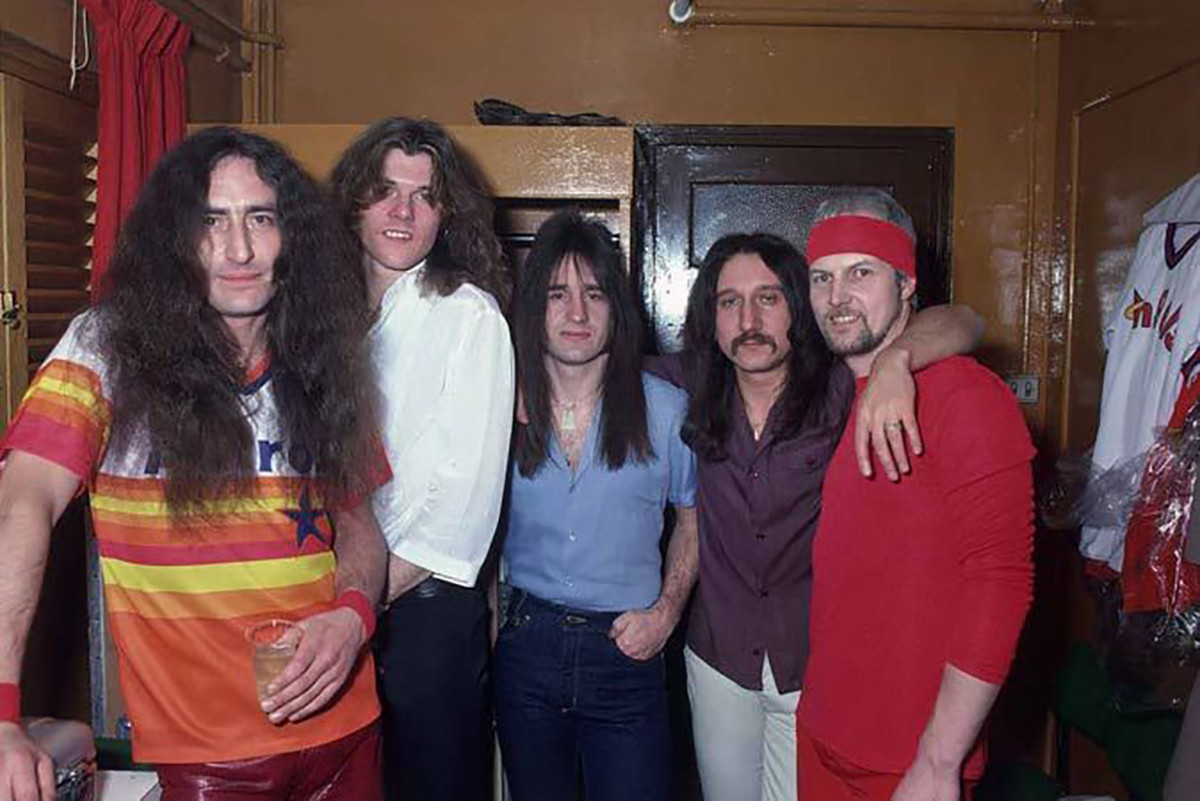
John Sloman: Yeah, well, there were a few, actually. But it was hard because Chris was a very close friend of mine at the time. We were rooming together, and Trevor was really close to me as well. I stayed with Mick often when we were in London; Mick even stayed at my parents’ house. My parents gave up their bed for Mick and made him a guest in the house. We took him to the local bar and all that. So, by this point, we were friends. I wish people would understand that while I was in Heep, we were still friends. It wasn’t like we weren’t friends. Ken just didn’t want me in the band. That was the issue.
It reached a point where I wanted to start doing my own thing. It was similar to where Ken was in the early ’70s when he did Proud Words on a Dusty Shelf and such. I was writing with Trevor, who was my writing partner. I spent a lot of time at Trevor’s place, where he would tell me stories about Bowie and other artists. One day, I played a finished song for Trevor, and he asked, ‘Where do I get to do my bit?’ That made me realize I was becoming a songwriter, and I wanted to focus on my own songs. So, I started writing more at home in ’81. Then, a few issues with Gerry Bron while I was still in Heep made me feel it was time to leave and pursue my own projects Again, this is something I don’t really want to go into, but it was just quite a rude stroke that some people pulled business-wise.
When you decided to leave Uriah Heep, how did you announce your departure from the band?
John Sloman: I told Trevor first. I walked half the way to Trevor’s house. He lived miles away, but I was so nervous about it because I knew that I had to tell him first because Trevor worked so hard to get me in the band. And so, I called him up, and I said, “Listen, Trevor, can I come and see you?” “Yeah, sure.” So, I went over, and I walked half the way, and then I got a cab the rest of the way. He opened the door, and he had this look on his face. He kind of knew. We sat at the kitchen table, and I told him, “Listen, I’ve got to leave the band, Trev.” And he said, “I knew it.” He said, “I knew it the moment you called me up.”

MORE ABOUT CONQUEST AND MUSICAL LANDSCAPES
I agree that ‘Conquest’ is different from typical Uriah Heep albums, but it was a bold new direction that influenced their future albums a lot. However, its release timing wasn’t ideal because punk music was becoming popular.
John Sloman: Oh, God, it was an awful time, especially living in Britain. The musical landscape had completely changed, with bands like The Police taking off. I loved The Police, which is why I say we were trying to relaunch. I’m referring to the period after “Conquest” and the things we started recording around early ’81 before I left. Anyway, it just wasn’t the vibe. That’s all there is to it.
The situation in the ’90s was similar, with grunge trends dominating the music market. You didn’t release new music during that decade. Is it correct to say this was because of those musical trends?
John Sloman: Yes, right. When people ask, ‘What did you do in the ’90s?’ I say, “I was waiting for the ’90s to end.” I thought I was waiting for the ’80s to end, and that was bad enough. People would ask if I had heard this grunge band or that grunge band. A friend of mine loved a lot of those bands, and when I heard them, I thought, ‘This is just rock music.’ Because I hadn’t heard anyone playing rock music before. I’m trying to think—from about 1985 to 1990 or ’91. And suddenly, you had Dave Grohl with Nirvana. We had drum machines for most of the ’80s. And Chris Cornell and people like that—fantastic singers, absolutely fantastic. Suddenly, I thought, ‘Hang on a minute, this is rock music.’ You can call it grunge if you want, but it’s rock music.
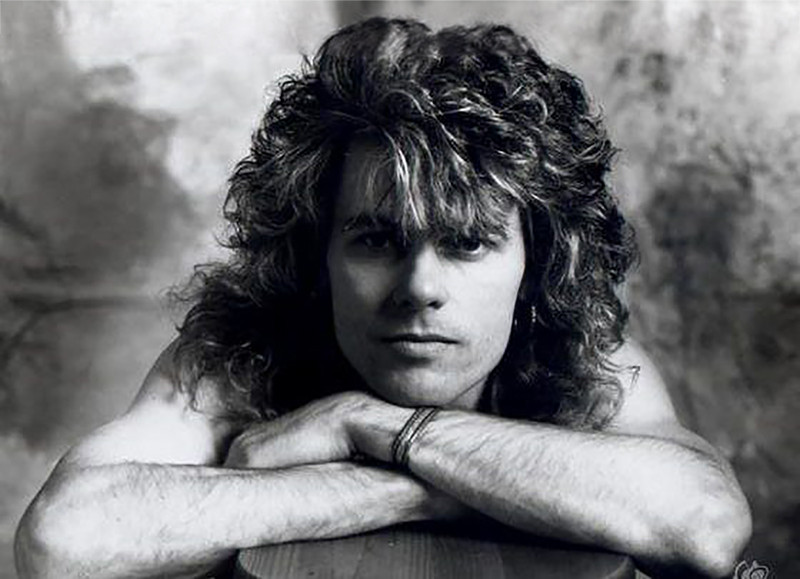
But I was still writing in the ’90s and recording the whole time. The record labels changed—they really did. They could literally switch on you overnight. During the punk era, all the labels suddenly started signing punk bands, and that’s what happened with Lone Star. CBS started signing punk bands. The same thing happened later in the ’80s. I remember talking to Tony Smith from Lone Star, and he mentioned that we should have gone to America in the ’80s because the whole rock scene took off there again. It was like the hair metal era. He feels that maybe if we had gone there, we might have even led that whole movement. Who knows? It’s like a parallel universe.

GARY MOORE
There’s another we need to discuss—and it’s your stint with Gary Moore.
John Sloman: Sure.
And if I recall correctly, you first sang some backing vocals on his “Corridors of Power” album, and shortly after, you were asked to join Gary’s touring band.
John Sloman: It was something like that. Well, what it was, I was in the Marquee one night in ’82, and Neil Murray was in the bar, funnily enough. We were introduced, and we got talking and realized that we had a lot of common musical influences. So, we got on really well. Neil called me a couple of days later and said maybe we should do something because Whitesnake was off the road. I was really flattered that Neil would be interested in doing something because my confidence wasn’t high at that point. Anyway, what happened was that we got together with my friend John Monroe, who’d been the drummer in the band with Pino back in the ’70s, a band called Trapper. John is a great drummer, and we had a few rehearsals. Eventually, we got John Sykes in because we had heard through the grapevine that John had left the Tygers of Pan Tang. Neil and I thought this could be good timing as opposed to bad timing. Why don’t we give him a call? I’d always got on really well with John, and Jon Deverill, the singer from the Tygers, was a friend of mine from Wales.
So, I called him up in Blackpool and invited him down to sleep on my floor for a couple of weeks. Jon came down, and we rehearsed for about a month and played the Marquee. I think we did one other gig in Southend. That was it for that band because John had the call from Phil Lynott to join Thin Lizzy, and Neil went to Gary. Shortly after that, Neil called me up and said, ‘John, if Gary were to call you up and ask if you were interested in touring, what would you say?’ Neil knew I was working on my own stuff. I said, ‘Well,’ and I’d met Gary a few times in a few bars, and like Neil, we’d got on, talked music and whatever. I said, ‘Gary’s amazing. Yeah, I might be interested,’ because I knew it was going to be a short tour anyway. I got the call from Gary, and that’s how I got involved. I wasn’t 100% sure about doing it, to be honest. But it was one of those opportunities where, well, Gary’s an amazing player. The band was amazing. Don wasn’t there at that point, but Ian Paice on drums—he was one of my heroes—and Neil.
How it was to tour with Gary and that band, which was a kind of “supergroup”?
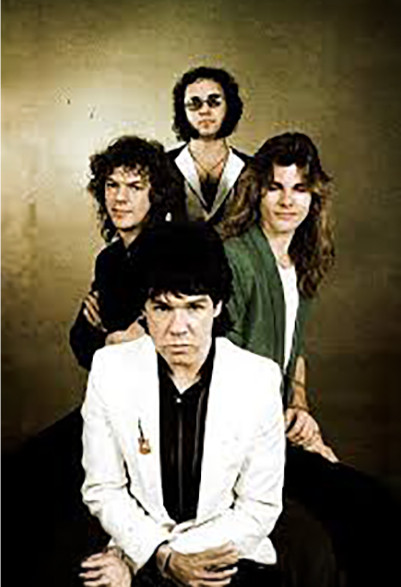

And I remember we did the Westfalen Halle festival with a lot of different bands. In Japan, we did two nights in a row, and Gary and I took a bus. It was close to Christmas, so we took a bus into town on the second day just to spend some time. He was talking to me about guitar players, and he was talking about Hendrix, and he was just saying, ‘Oh, he was special.’ And that’s what I reflected on when I heard that he died because I thought, well, that’s how people are talking about you now, Gary. Maybe a lot of people did when he was around when he was still with us, but certainly, now, they seem to talk about him in that kind of almost ethereal way. And you know, he lives on posters in bedrooms, if you know what I’m saying.
And I remember when we played in London. What happened was we came off stage, and Gary and I walked into the wings before going back on for the encore. Here comes Paul, Paul Chapman, walking towards me. I wanted to say, ‘How the hell did you get backstage? How’d you get backstage on this side of the stage?’ He says, ‘That sounded great.’ So, okay, I thought I was going to speak to Paul afterward, right? Because now, we’re going back on for the encore. So, Gary is putting on his Les Paul, and he goes to Paul like this. He hands Paul his Les Paul, and Paul goes to grab it, but Gary takes it back, which is a little bit cruel because I think Paul thought; ‘All right, I’m going to get up and play with Gary.’ Yeah, exactly. Because Paul used to love getting up and jamming with people. It’s just that the encore would’ve gone on for about a week if Paul had gotten up on stage. But yeah, I remember stuff like that with Gary. He also came down and played on some of my demos that I did after the tour, which was cool, you know?
Why didn’t you work more with Gary Moore after the tour?
John Sloman: It’s a long story, that one, because something happened. Something happened regarding the live album, and it’s something that I’m kind of uncomfortable about even talking about, but it’s what happened. I went off, I was on tour, I came back, and it was my birthday. So, my girlfriend then organized a surprise birthday party for me. So, this is after the live album came out, right? Neil Murray comes over along with other nice friends. So, it’s that time in the party where you’ve been drinking for a while, and now it’s just me and Neil in the kitchen, catching up. And Neil says, ‘John, did you get the check?’ I went, ‘What check?’ And Neil looked at me, and he realized what he’d said, that he had spoken too soon. So, it turned out anyway that what happened was that everyone on the live album had a deal where they were going to receive a cut of the royalties. Everybody except me. So, that’s how I found out in my kitchen
“Well, what happened next? I called Gary’s then-manager and asked, ‘What was going on?’ As you would, and he said to me, ‘You were paid everything that we agreed.’ And I thought, ‘Wow, that’s one way of putting it.’ So, then years later, someone else urged me to call Gary’s management because he had a different manager. I think it was Don Airey’s brother, Keith, a great guitar player, by the way. And he says, ‘Look, everyone did really well over that live album.’ At this point, I was broke. So, I called Gary’s then-manager and the new manager. I said, ‘Hey, I toured with Gary, did the live album. I hear that everyone was on a royalty, but I was actually left out of this. Can you go to Gary and ask him about this?’ And his manager came back a couple of days later, saying, “Gary says that the guys were just winding me up,” which was disappointing. So that’s really why I then went, ‘Okay.’ Now, it could still be that Gary didn’t know anything about it, and he thought that I was trying to make trouble, but it happens, you know. To this day, I would rather believe that Gary didn’t know. However, he could have called me up because we always got along great. He could have got on the phone with me and said, ‘Hey, John, what’s this idea?’ and straightened it out. But he just didn’t; he just left me with that.
So, the whole thing was kind of left in the air.
John Sloman: Yeah, exactly. Everyone knows, Neil Murray knows, they all know that I was unfortunately screwed over there. But it’s just one of those stories in the music business.
THE DEATH OF GARY MOORE
As we all know, Gary Moore sadly passed away in 2011 at the age of 58. It came out of as a surprise for most people, including me. Do you remember how you found out that he was gone?
John Sloman: It was very tragic. I was shocked, really shocked, because I was at home. I remember I had Radio 4 on, right? BBC Radio 4 is quite a serious station, focusing on politics and such. So, when they announce someone’s death on Radio 4, it’s usually someone very important. The news bulletin came on, and I remember the announcer said, ‘The rock guitarist…’ Those were the first words. Time seemed to slow down at that moment. I started thinking of all the rock guitar players they might mention, though I won’t mention names. But you can imagine who might have been in that sentence. When the announcer said Gary’s name, I was shocked. I was really shocked. I didn’t know. People told me afterward that he wasn’t in good shape, but I hadn’t been in touch with Gary for a long time. So, I still thought of him as this robust, strong guy and an amazing musician.
He really was like that. So, John, I think it’s time to conclude this marathon interview on a more positive note. I wish you the best of luck with ‘Vaudeville’ and your other interesting projects in the future.
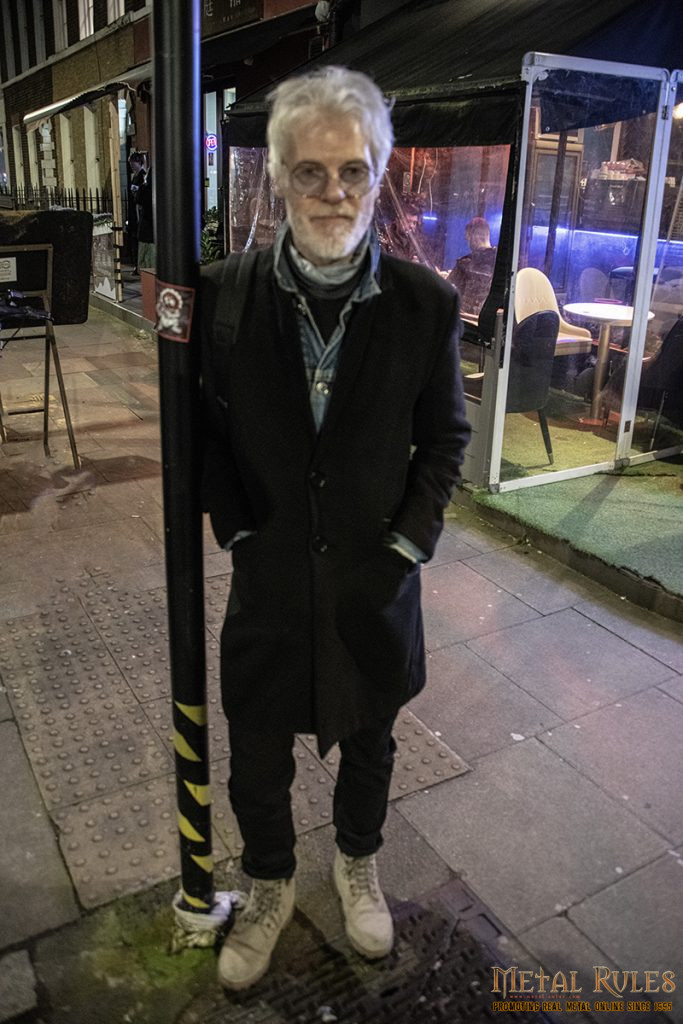
John Sloman: Thank you Marko. It was good to talk with you.
OFFICIAL JOHN SLOMAN FACEBOOK PAGE

JOHN SLOMAN AND HIS PAST BAND’S MUSIC VIDEOS


![Uriah Heep - Think It Over (1980-official videoclip) [HD-1080p60]](https://i.ytimg.com/vi/rWw7yCOfcd4/hqdefault.jpg)


![John Sloman - This River Is A Time Machine [OFFICIAL VIDEO]](https://i.ytimg.com/vi/TmI36vWgvlQ/hqdefault.jpg)
![John Sloman - The Last Coalminer [OFFICIAL VIDEO]](https://i.ytimg.com/vi/NLcS0XO4uYg/hqdefault.jpg)


Read the full article here