






 English
 Français
 Deutsch
 Italiano
 Português
 Русский
 Español
 Svenska
 ไทย
ไทย Türkçe
 हिन्दी
 Filipino
 简体中文
简体中文 한국어
한국어 Polski
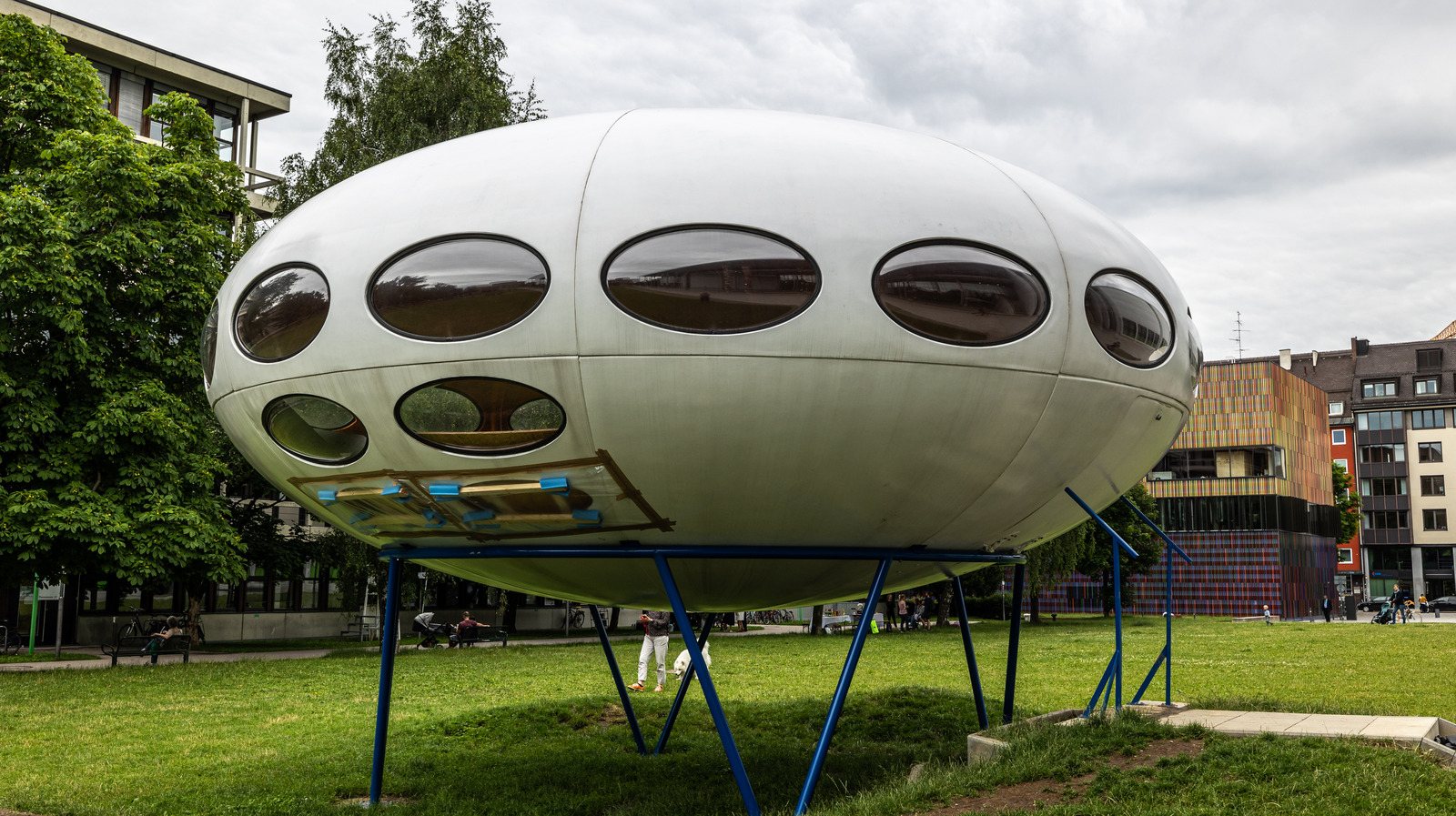
The iconic Futuro design was the brainchild of Finnish architect Matti Suuronen, who was hired to create the new generation of ski chalets. Suuronen’s task was to devise a portable, compact home capable of withstanding harsh weather. He designed a spherical prefab home with a central living area, bedroom, kitchen, and bathroom. They were constructed of mid-century America’s preferred material: plastic. The relatively new material was post-World War II’s inexpensive, durable, and malleable replacement for traditional building materials. The thin polyester plastic shell contained a layer of polyurethane foam insulation, which kept Futuro homes warm even in cold skiing climates.
As for pros of this home design, the durable materials were as resilient as Suuronen intended. The Pensacola, Florida Futuro home hasn’t been damaged by hurricanes, per Atlas Obscura. In addition, the materials were easy to clean and resistant to deterioration. The homes were also simple to build on-site without a foundation. However, there were some downsides, including that it was difficult to relocate these homes. The original plan was for the lightweight homes to be airlifted by helicopter, but the cost proved impractical. Other drawbacks include the homes’ size. At 500 to 600 square feet and 13 feet tall, it’s a tight living space for more than one person. And though its elevation with a drawbridge or folding-stairs entrance was part of what made the design UFO-like, it was not an accessible option for those with hindered mobility.
Read the full article here